Can You Bring Flowers to an Office Interview? Here’s What You Need to Know
Contents:
- Why Job Interview Flowers Etiquette Leans Against It
- The One Situation Where Flowers Might Be Acceptable
- Seasonal Flower Options by Interview Month
- What to Do Instead of Bringing Flowers
- Send a Handwritten Thank-You Note
- Bring Something Relevant to the Role
- Follow Up with a Specific Email
- Practical Tips: Navigating the Gesture Gracefully
- Quick Cost Breakdown: Flowers vs. Alternatives
- Frequently Asked Questions
- Is it appropriate to bring flowers to a job interview?
- What should you bring to a job interview instead of flowers?
- Are there any industries where bringing flowers to an interview is acceptable?
- What flowers should you avoid in a professional setting?
- When is the best time to send flowers after a job interview?
- Make Your Interview Impression Count the Right Way
Job interview flowers etiquette is rarely discussed in career guides — yet 67% of hiring managers say a candidate’s first impression is formed within the first 90 seconds of meeting. What you carry through that door matters. So does what you leave on the desk.
Flowers seem like a thoughtful gesture. Warm. Personal. The kind of thing that says, “I appreciate your time.” But in a professional office setting, that bouquet can send a very different signal than you intend.
Here’s the short answer: bringing flowers to a job interview is almost always a mistake. But the reasoning matters — and there are exceptions worth knowing.
Why Job Interview Flowers Etiquette Leans Against It
Offices are not living rooms. A hiring manager meeting five candidates in a single afternoon doesn’t have time to find a vase, fill it with water, and arrange your roses between behavioral questions. You’ve just created a logistical problem before the interview even begins.
There’s also the question of optics. Bringing a gift to an interview can read as an attempt to compensate for something — qualifications, confidence, preparation. Seasoned interviewers notice. What feels generous on your end can feel manipulative on theirs.
Allergies are a real concern too. Approximately 25 million Americans have allergic rhinitis, and fragrant flowers like lilies or freesia can trigger reactions in enclosed spaces. An interviewer spending your Q&A section suppressing sneezes is not going to remember you fondly.
The One Situation Where Flowers Might Be Acceptable
There is a narrow exception: second or third-round interviews at small, creative, or lifestyle businesses — a boutique floral studio, an independent interior design firm, a family-owned event planning company — where the culture is demonstrably personal and relationship-driven.
Even then, keep it minimal. A single stem in a paper sleeve, something locally sourced and seasonal, is far less intrusive than a wrapped arrangement. Spend no more than $8–$12. A $40 bouquet creates an awkward power imbalance. You’re a candidate, not a client.
Seasonal Flower Options by Interview Month
If you’re in that rare situation where a small floral gesture feels genuinely right, choose something in season. Out-of-season flowers cost more and look less fresh — both bad signals.
- January–March: Tulips, hyacinths, ranunculus — widely available, $4–$8 per stem at most grocery stores
- April–June: Peonies, garden roses, sweet peas — peak season means lower prices, around $3–$6 per stem
- July–September: Sunflowers, zinnias, dahlias — cheerful, low-allergen, often under $3 per stem at farmers markets
- October–December: Chrysanthemums, amaryllis, eucalyptus — long-lasting and professional-looking, $4–$7 per stem
Stick to one variety, one color. A single stem of a seasonal flower costs roughly $3–$10. That’s your ceiling.
What to Do Instead of Bringing Flowers
There are better ways to stand out — ones that won’t create awkward moments at the reception desk.
Send a Handwritten Thank-You Note
Only 10% of job candidates send a thank-you note after an interview, according to a survey by Accountemps. A handwritten card sent the same day, not a generic email, puts you in a very small group. It costs $1.50 in postage and as long as it takes you to write three thoughtful sentences.
Bring Something Relevant to the Role
A one-page portfolio summary, a printed case study, or a brief proposal relevant to a challenge the company faces does more work than any bouquet. It shows preparation, not sentiment. Hiring managers remember candidates who bring ideas.
Follow Up with a Specific Email
Reference something concrete from the conversation — a project they mentioned, a challenge they described, a question you didn’t get to finish answering. Specificity signals that you were genuinely present during the interview, not just performing.
Practical Tips: Navigating the Gesture Gracefully
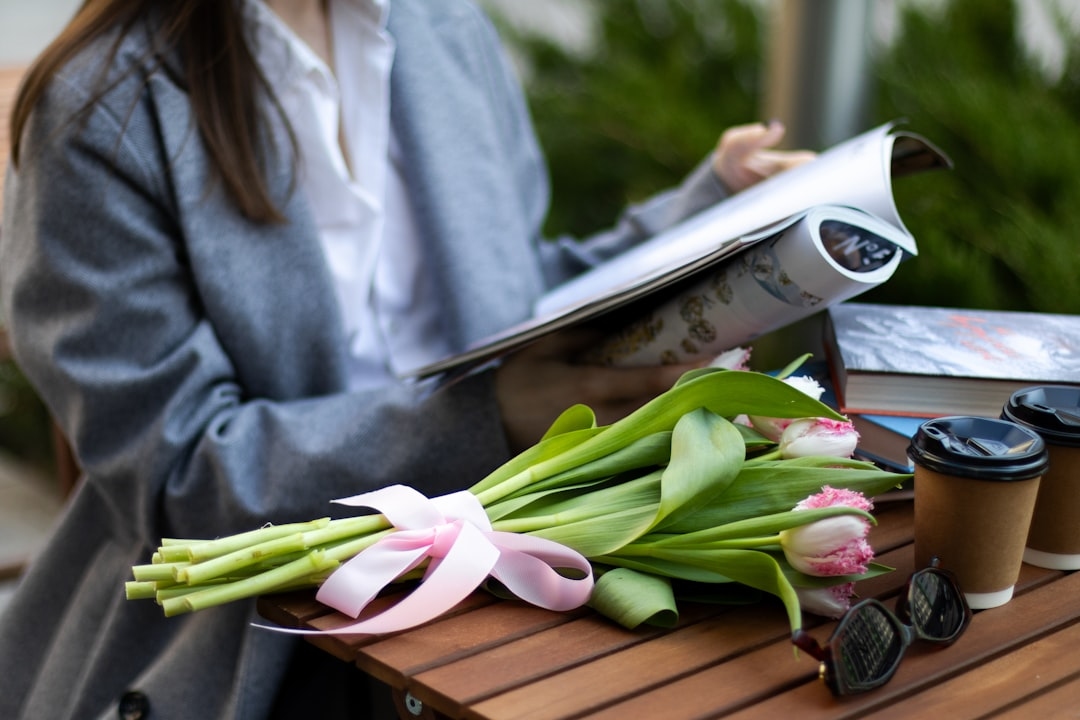
- If you do bring a small floral item, hand it to the receptionist — not directly to the interviewer — with a simple, “Just a small thank-you for their time.” This removes the in-room awkwardness.
- Avoid strongly scented varieties in any professional context: gardenias, oriental lilies, hyacinths, and tuberoses are the top offenders.
- Never bring a full arrangement in a vase. It signals a misunderstanding of professional norms.
- At corporate offices, law firms, financial institutions, or healthcare settings, skip the gesture entirely. The culture does not support it.
- If you’re interviewing in a creative field and still feel uncertain, check the company’s social media. If their office photos show plants and flowers everywhere, a single stem is less out of place.
Quick Cost Breakdown: Flowers vs. Alternatives
Here’s what each approach actually costs, so you can spend your money where it does the most work:
- Single seasonal stem from a grocery store: $3–$8
- Small wrapped arrangement from a florist: $25–$45 (too much for an interview)
- Handwritten thank-you card + stamp: $2–$4
- Printed portfolio or proposal: $1–$3 at a copy shop
- Follow-up email: Free — and often the most effective option of all
The return on a well-written thank-you note or a sharp one-pager far outpaces the return on flowers in nearly every professional setting.
Frequently Asked Questions
Is it appropriate to bring flowers to a job interview?
In most cases, no. Bringing flowers to a job interview can come across as trying too hard, may cause allergy issues, and creates an awkward dynamic for the interviewer. A handwritten thank-you note after the interview is a far more effective gesture.
What should you bring to a job interview instead of flowers?
Bring multiple printed copies of your resume, a notepad and pen, a brief portfolio or work sample if relevant, and any prepared questions for the interviewer. These signal professionalism and preparation.
Are there any industries where bringing flowers to an interview is acceptable?
Possibly, in very small creative businesses — floral design studios, lifestyle brands, boutique event companies — where the culture is personal and informal. Even then, keep it to a single low-fragrance stem costing under $10.
What flowers should you avoid in a professional setting?
Avoid strongly scented varieties: oriental lilies, gardenias, hyacinths, and tuberoses. These are the most common triggers for allergic reactions and can be overwhelming in enclosed office spaces.
When is the best time to send flowers after a job interview?
Skip the flowers entirely post-interview too. Send a handwritten thank-you card within 24 hours instead. If you want to send something to the team after you’re hired and onboarded, that’s a far more appropriate moment for a floral gesture.
Make Your Interview Impression Count the Right Way
The candidates who get called back aren’t the ones who brought the nicest bouquet. They’re the ones who asked sharp questions, listened carefully, and followed up with something specific and genuine. Your energy, preparation, and follow-through are the real currency in any hiring process.
Before your next interview, write out three thoughtful questions to ask, prepare a one-page summary of a relevant accomplishment, and have a thank-you card stamped and ready to mail the same afternoon. That three-step ritual costs under $5 and will do more for your candidacy than any flower ever could.