Can You Send Flowers Anonymously? The Etiquette You Need to Know
Contents:
- The Long History of Anonymous Floral Gifts
- Anonymous Flowers Etiquette: The Core Rules
- When Anonymous Flowers Are Completely Appropriate
- When Anonymous Flowers Cross the Line
- How to Send Flowers Anonymously the Right Way
- Choose Your Florist Carefully
- Write a Note — Even Without Your Name
- Timing Matters More Than You Think
- Practical Tips for a Seamless Anonymous Delivery
- FAQ: Anonymous Flowers Etiquette
- Is it legal to send flowers anonymously?
- Can the recipient find out who sent anonymous flowers?
- What flowers are appropriate to send anonymously?
- How do I practice good anonymous flowers etiquette without revealing myself?
- Are eco-friendly anonymous flower options available?
- Make Your Next Move Count
Anonymous flowers are not inherently creepy. The intention behind them, and how you execute the gesture, is what makes all the difference. Done right, a mystery bouquet can feel magical. Done wrong, it feels like a reason to call someone.
Understanding anonymous flowers etiquette isn’t complicated, but it does require some honest self-reflection before you pick up the phone and dial a florist. This guide breaks down exactly when sending flowers without a name is a genuinely kind gesture — and when it crosses a line you don’t want to cross.
The Long History of Anonymous Floral Gifts
Sending flowers without identifying yourself has roots going back centuries. In Victorian England, the language of flowers — called floriography — was used to send coded emotional messages. Anonymity was part of the game. A red rose left on a doorstep spoke volumes without a single word or signature.
In the US, the tradition evolved differently by region. In the Northeast, particularly in cities like Boston and New York, the custom of anonymous Valentine’s Day flowers became popular in the 19th century as a way to express admiration while avoiding the social risk of rejection. In the South, anonymous gifting was more often tied to community support — sending flowers to a grieving neighbor without wanting recognition for the gesture. On the West Coast, the culture leans more direct, and anonymous flowers are less common outside of romantic holidays.
Today, the gesture spans all three motivations: romance, support, and celebration. Context determines which one you’re dealing with.
Anonymous Flowers Etiquette: The Core Rules
Before anything else, ask yourself one question: Would this person be happy or unsettled to receive these flowers? If you genuinely don’t know the answer, that’s your answer.
When Anonymous Flowers Are Completely Appropriate
- Grief and condolence situations. Sending flowers to someone who just lost a family member, without attaching your name, is an act of quiet generosity. There’s no expectation of a thank-you note, no social obligation placed on the recipient. A simple white lily arrangement — averaging around $45–$65 at most US florists — sent without fanfare is one of the most considerate things you can do.
- Celebrating a colleague or neighbor. If a coworker just got promoted or a neighbor had a baby, anonymous flowers remove any awkwardness about perceived favoritism or differing social standing.
- Romantic admiration — with a light touch. A single bouquet to someone you’re interested in can be charming, particularly if you reveal yourself shortly after or in person. The key word: once. One anonymous bouquet is intriguing. A second is unsettling. A third requires a conversation you don’t want to have.
When Anonymous Flowers Cross the Line
- Sending them repeatedly to someone who hasn’t responded positively.
- Sending them to an ex, especially post-breakup or following any conflict.
- Sending them to someone at their workplace when you don’t have a prior relationship — this can feel invasive in a professional setting.
- Sending them when you have reason to believe the recipient would be frightened or confused by the gesture.
Most professional florists will tell you the same thing: around 15–20% of anonymous flower orders raise at least a mild flag with staff. The ones that don’t are almost always tied to sympathy, celebration, or lighthearted holidays like Valentine’s Day.
How to Send Flowers Anonymously the Right Way
Choose Your Florist Carefully
Not every florist handles anonymous orders with the same discretion. Local florists, particularly those with brick-and-mortar shops, tend to handle these situations with more nuance than large national delivery services. A small shop in your zip code is more likely to ask gentle clarifying questions and ensure the delivery feels appropriate. National services like 1-800-Flowers or Teleflora will process the order without judgment, but they also won’t intervene if something seems off.
If you want to go the extra mile and support sustainable practices at the same time, look for florists who source American-grown or locally-grown flowers. The US cut flower industry imports roughly 80% of its flowers — mostly from Colombia and Ecuador — but domestic farms in California, Oregon, and Washington offer eco-friendly alternatives with a significantly lower carbon footprint. Ordering a locally-sourced arrangement adds thoughtfulness to the gesture without adding to your cost.
Write a Note — Even Without Your Name
A completely blank card is stranger than a signed one. You don’t have to reveal your identity to give context. Something as simple as “Thinking of you” or “Congratulations on your news” tells the recipient this is a kind gesture, not a threatening one. Keep it to one or two sentences. Avoid anything that hints at surveillance, like referencing something you overheard or observed about their life.
Timing Matters More Than You Think
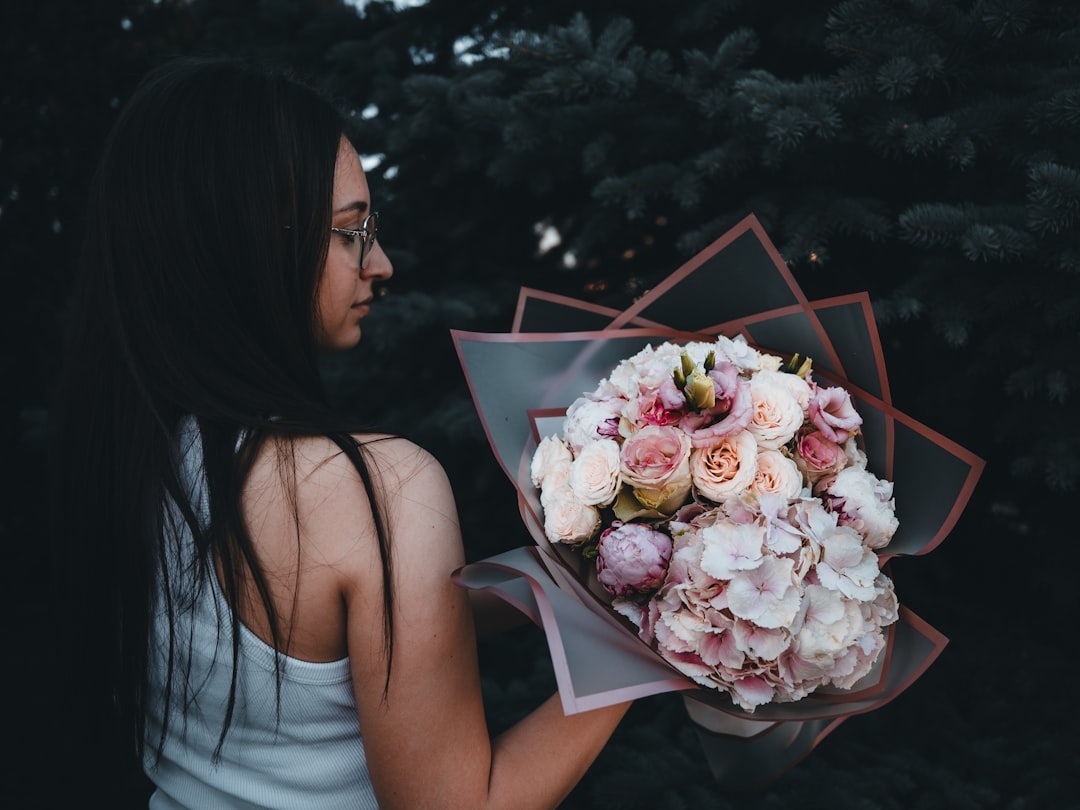
Anonymous flowers on Valentine’s Day read as romantic and playful. Anonymous flowers on a random Tuesday in October read differently. Tie the gesture to a recognizable moment — a holiday, a birthday, a life event — and the ambiguity feels intentional and sweet rather than mysterious and unsettling.
Practical Tips for a Seamless Anonymous Delivery
- Use a credit card instead of a gift card if you’re ordering online — this protects your billing information if there’s ever a dispute, while still keeping your name off the arrangement.
- Avoid adding personal details in the note that could identify you unintentionally (an inside joke, a specific memory) unless you plan to reveal yourself later.
- If you’re ordering for a workplace delivery, confirm the recipient’s schedule so the flowers aren’t sitting at an unmanned desk or — worse — intercepted by a manager.
- Budget around $50–$80 for a decent mixed arrangement from a local florist. Anything significantly cheaper often arrives looking it.
- Ask about sustainable packaging. Many florists now offer recycled wrapping and compostable foam alternatives instead of standard floral foam, which is non-biodegradable and sheds microplastics.
FAQ: Anonymous Flowers Etiquette
Is it legal to send flowers anonymously?
Yes, sending anonymous flowers is entirely legal in the US. Florists are not required to disclose the sender’s identity to the recipient. The only exception would be if the delivery were part of a harassment or stalking investigation, in which case law enforcement could subpoena records.
Can the recipient find out who sent anonymous flowers?
Possibly. Most florists keep records of all orders for at least 90 days. If a recipient is genuinely disturbed and contacts the florist, some shops may disclose sender information voluntarily or if legally compelled. National online services tend to have stricter privacy policies, but they are not absolute.
What flowers are appropriate to send anonymously?
For sympathy or support: white lilies, white roses, or soft mixed arrangements. For romantic gestures: a single red rose or a small mixed bouquet — not a dramatic 24-stem arrangement, which escalates the intensity of the gesture. For celebrations: bright sunflowers or seasonal blooms work well and feel cheerful rather than charged.
How do I practice good anonymous flowers etiquette without revealing myself?
Keep the note warm but brief, tie the delivery to a known occasion, send only once unless you’ve gotten a positive response, and choose a reputable local florist who will handle the delivery professionally. The gesture should make the recipient’s day better — not leave them wondering who to be cautious of.
Are eco-friendly anonymous flower options available?
Yes. Search for florists certified by Veriflora or the Rainforest Alliance, or look for farms listed on the Slow Flowers directory, which focuses on domestically grown, sustainably sourced blooms. These options are available in most major US metro areas and many smaller cities.
Make Your Next Move Count
Anonymous flowers done well are a rare and genuinely touching gesture. The etiquette isn’t complicated: be honest about your motivation, choose the right occasion, write a brief note, and stop at one delivery unless you’ve gotten clear encouragement to continue. If the gesture is rooted in kindness rather than expectation, it almost always lands that way.
Your next step is simple. Find a local florist who sources sustainable, American-grown flowers, pick an arrangement that fits the occasion, and let the flowers do the work. Sometimes the most powerful messages are the ones that don’t need a signature.