Is It Rude to Give Grocery Store Flowers as a Gift?
Contents:
- Why Grocery Store Flowers Have a Bad Reputation
- When a Grocery Store Flowers Gift Is Completely Appropriate
- A Seasonal Gift-Giving Calendar
- Occasions Where They Shine
- When to Choose a Florist Instead
- How to Make Grocery Store Flowers Look Like a Florist Made Them
- Expert Tip: Conditioning Is Everything
- Presentation Upgrades That Cost Almost Nothing
- The Single-Variety Bouquet Trick
- What the Recipient Actually Thinks
- Frequently Asked Questions
- Are grocery store flowers lower quality than florist flowers?
- Is it rude to give grocery store flowers as a gift?
- How do I make grocery store flowers last longer?
- What are the best grocery store flowers to buy as a gift?
- How much should I spend on grocery store flowers as a gift?
- Your Next Move
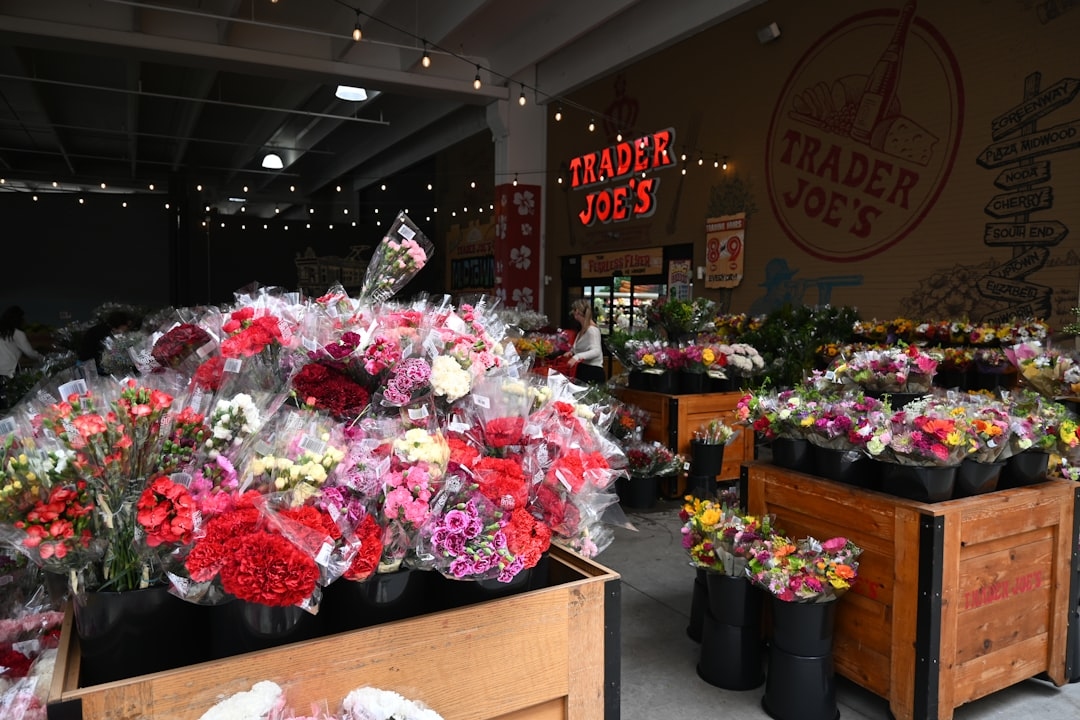
In Victorian England, flowers weren’t just pretty — they were a language. A red rose meant love, yellow meant friendship, and showing up with a wilted bunch was practically an insult. Thankfully, we’ve loosened up a lot since then. Today, a $12 bouquet from your local Trader Joe’s can genuinely brighten someone’s entire week. So is a grocery store flowers gift rude? Short answer: absolutely not. Long answer: here’s everything you need to know to give them with confidence.
Why Grocery Store Flowers Have a Bad Reputation
The stigma comes from perception, not reality. Somewhere along the way, “effort equals expense” became the unofficial rule of gift-giving — and a bouquet that costs $8 next to the checkout line doesn’t feel like effort. But that’s a cultural assumption, not a floral fact.
Mass-market grocery chains like Whole Foods, Trader Joe’s, and Costco actually source many of their flowers from the same South American farms — particularly Colombia and Ecuador — that supply mid-range florists. Colombia alone accounts for roughly 65% of all cut flowers imported into the United States. The origin story of your grocery store bouquet isn’t that different from the one behind a $60 arrangement.
What does differ is conditioning, arrangement, and longevity. Grocery store flowers sometimes skip the careful cold-chain handling that specialized florists prioritize, which can shorten vase life. But with a few simple prep steps (more on that below), you can close that gap significantly.
When a Grocery Store Flowers Gift Is Completely Appropriate
Most occasions — and we mean most — are perfectly suited to a supermarket bouquet. Here’s a practical breakdown by season and situation.
A Seasonal Gift-Giving Calendar
- January–February: Tulips and ranunculus arrive in stores early. A mixed tulip bunch for a winter birthday or a Valentine’s Day dinner host is warm, cheerful, and totally fitting.
- March–May: Spring is peak grocery flower season. Daffodils, alstroemeria, and mixed spring bunches flood the displays. Ideal for Easter gatherings, Mother’s Day (May), and teacher appreciation gifts.
- June–August: Sunflowers dominate summer grocery floral sections. A $10 sunflower bunch for a backyard barbecue host is a genuinely delightful touch.
- September–November: Mums and dahlias are plentiful. Perfect for Thanksgiving hostess gifts or a quick “thinking of you” gesture.
- December: Poinsettias and amaryllis are everywhere. A potted amaryllis from a grocery store is actually a longer-lasting gift than cut flowers from anywhere.
The key insight: buying in-season flowers from a grocery store almost always means fresher stems than out-of-season blooms from a boutique florist.
Occasions Where They Shine
- Casual dinner party hostess gift
- A “just because” gesture for a friend or partner
- Get-well visits (hospitals often prefer simple, unscented arrangements anyway)
- Office celebrations like work anniversaries or promotions
- Housewarming gifts for someone in a small apartment — a single-variety bunch fits a bud vase perfectly
When to Choose a Florist Instead
There are a handful of moments where a florist’s expertise genuinely matters. Wedding ceremony flowers, sympathy arrangements for funeral services, and milestone anniversaries (think 25th or 50th) call for something more intentional in design and presentation. These aren’t moments where price signals love — they’re moments where a trained eye creates meaning through composition and flower selection.
A rough rule: if the flowers will be photographed, publicly displayed, or are the centerpiece of the occasion, budget $50–$150 for a proper florist arrangement. For everything else, your grocery store has you covered.
How to Make Grocery Store Flowers Look Like a Florist Made Them
This is where small-apartment gifters have a real advantage. You don’t need a workshop — just a cutting board, scissors, and five minutes.
Expert Tip: Conditioning Is Everything
“Most people skip the conditioning step, and that’s why grocery store flowers get a bad reputation for dying quickly,” says Dana Whitfield, Certified Floral Designer (CFD) and owner of Stem & Stone Studio in Portland, Oregon. “Cut at least an inch off the stems at a 45-degree angle under running water, remove any leaves below the waterline, and let them sit in clean, room-temperature water for two hours before gifting. You’ll add three to five days of vase life just from that.”
Presentation Upgrades That Cost Almost Nothing
- Remove the plastic sleeve and rewrap in kraft paper or tissue. This single step makes any bouquet look intentional.
- Add a stem of something unexpected. A sprig of rosemary, eucalyptus, or even a few stems of fresh herbs from the produce section costs under $2 and adds texture and fragrance.
- Use twine instead of the rubber band. A loop of natural twine around the stems looks hand-tied and artisan.
- Pair with a bud vase. For apartment dwellers receiving the gift, a small bud vase (available at most dollar stores for $1–$3) means the flowers are ready to display immediately — no hunting for a vessel required.
The Single-Variety Bouquet Trick
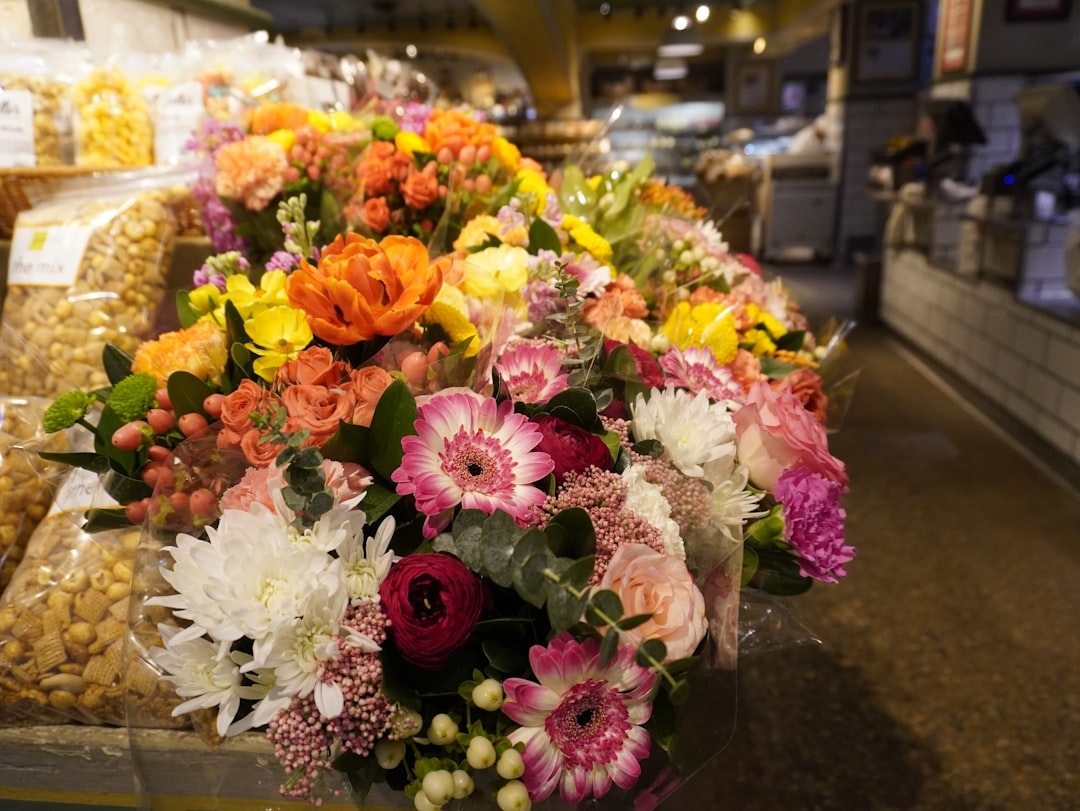
Mixed grocery store bouquets can sometimes look chaotic. If you have the option, buy two bunches of the same flower — say, white carnations or orange alstroemeria — and combine them. A monochromatic, single-variety bouquet looks deliberate and modern. It’s a technique florists charge a premium for. You can replicate it for under $15.
What the Recipient Actually Thinks
A 2026 survey by the Society of American Florists found that 74% of Americans reported feeling “genuinely happy” receiving any fresh flowers, regardless of where they were purchased. Only 6% said the source of the flowers mattered to them. The emotional response to receiving flowers is about the gesture, the color, and the presence — not the price tag or the store name on the wrapper.
For someone living in a small apartment, a compact grocery store bouquet is often more practical than an oversized florist arrangement that overwhelms a tiny kitchen table or doesn’t fit any available vessel.
Frequently Asked Questions
Are grocery store flowers lower quality than florist flowers?
Not necessarily. Many grocery stores source flowers from the same Colombian and Ecuadorian farms as mid-range florists. Quality depends more on how recently the flowers were stocked and how well you condition them at home than on where you bought them.
Is it rude to give grocery store flowers as a gift?
No. For most casual and social occasions, grocery store flowers are entirely appropriate. The gesture of bringing fresh flowers matters far more than the origin of the bouquet. Only highly formal occasions — weddings, funerals, major milestone events — typically call for a professional florist arrangement.
How do I make grocery store flowers last longer?
Cut stems at a 45-degree angle, remove leaves below the waterline, change the water every two days, and keep the vase away from direct sunlight and fruit bowls (ripening fruit releases ethylene gas, which speeds up wilting). Done consistently, these steps can extend vase life from 5 days to 10 or more.
What are the best grocery store flowers to buy as a gift?
Tulips, alstroemeria, carnations, and sunflowers are consistently the best value and longest-lasting options at grocery stores. Avoid pre-mixed bouquets with open roses if they’re already fully bloomed — they have less vase life remaining. Look for tight or half-open buds instead.
How much should I spend on grocery store flowers as a gift?
A thoughtful grocery store bouquet typically costs between $8 and $20. Spending $12–$15 on a single-variety bunch and adding a $2 sprig of eucalyptus creates a gift that looks and feels worth $30–$40. It’s not about the budget — it’s about the small styling choices.
Your Next Move
Next time you’re at the grocery store, pause at the floral section with fresh eyes. Look for tight buds, check the water in the buckets (clear water means fresh stock, cloudy water means skip it), and pick the variety that’s most in season. Grab a piece of kraft paper from the craft aisle, tie it with twine, and you have a gift that’s warm, personal, and genuinely beautiful — no florist required.
The best flower gift isn’t the most expensive one. It’s the one that arrives.