Should You Bring Flowers to a Potluck That Says No Gifts?
Contents:
- What “No Gifts” Actually Means at a Potluck
- The Potluck No Gifts Flowers Etiquette Framework
- The Three Rules for Flowers at a No-Gift Gathering
- Which Flowers Work Best — and Which to Avoid
- Best Choices for a Potluck Setting
- Flowers to Reconsider
- Regional Differences in Flower Gifting Culture
- The Eco-Friendly Case for Garden-Cut Flowers
- Practical Tips for Potluck Flower Prep
- FAQ: Flowers and No-Gift Potluck Etiquette
- Are flowers considered a gift at a potluck?
- What if the host explicitly says “absolutely no gifts of any kind”?
- Is it rude to bring flowers instead of a food dish to a potluck?
- How much should I spend on flowers for a no-gift potluck?
- Can I bring a potted plant instead of cut flowers?
- Making the Most of Your Garden at Social Gatherings
The smell hits you before you even ring the doorbell — garlic, rosemary, something sweet in the oven. You’re standing on the porch with a bunch of dahlias from your garden, wondering if the invitation’s “no gifts, please” applies to flowers, too. It’s a surprisingly common dilemma, and the answer isn’t as obvious as it looks.
Potluck no gifts flowers etiquette sits at the intersection of social nuance and horticultural generosity. Understanding it properly means thinking about what a “gift” actually is — and what flowers actually do at a gathering.
What “No Gifts” Actually Means at a Potluck
When a host writes “no gifts,” they’re almost always signaling one specific thing: don’t bring wrapped presents, don’t spend money on me, don’t make this occasion feel transactional. The phrase emerged from a cultural backlash against obligation-driven gifting — particularly at adult birthday parties, casual dinner gatherings, and neighborhood potlucks where the focus is on shared food and company.
Flowers occupy a gray zone in this etiquette framework. A $60 floral arrangement in a designer box? That reads as a gift. A loose bundle of seven garden zinnias tucked in a recycled jam jar? That reads as a gesture — one that benefits the entire room, not just the host’s mantelpiece. The distinction isn’t arbitrary. It reflects the underlying intent of the “no gifts” request.
Emily Post’s etiquette guidelines have long recognized this distinction: items that are consumable or serve the event itself — wine, flowers for the table, homemade bread — generally fall outside the spirit of a gift prohibition. The key word is proportionality.
The Potluck No Gifts Flowers Etiquette Framework
Think of it as a spectrum. On one end: an extravagant arrangement that demands acknowledgment, storage, and a thank-you note. On the other: a few stems laid on the table that get arranged in a water glass and forgotten by dessert. The closer your flowers sit to the second end, the more clearly they’re a contribution rather than a gift.
The Three Rules for Flowers at a No-Gift Gathering
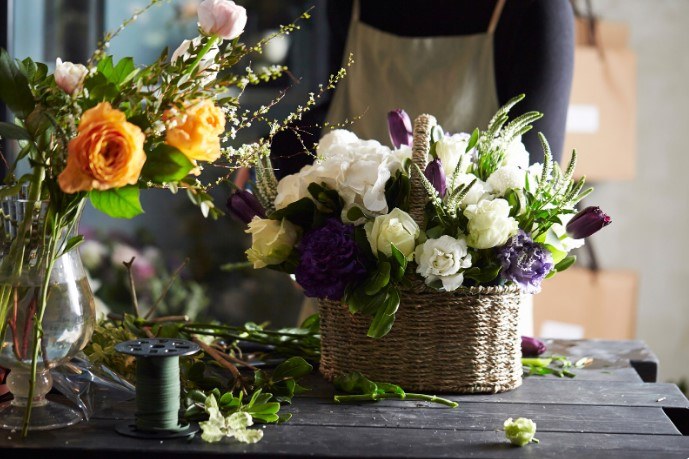
- Bring a vessel. Never hand someone a dripping bouquet and walk away. A simple mason jar, a small ceramic pot, or even a cleaned pasta sauce jar means the host doesn’t have to scramble. This single act shifts flowers from “gift requiring effort” to “table decoration, ready to go.”
- Keep the scale modest. Five to nine stems is the sweet spot. A single stem feels perfunctory; fifteen stems wrapped in kraft paper feels like an anniversary bouquet. Odd numbers read as natural, not arranged — more garden, less florist.
- Frame them communally. “I thought these would look nice on the table” is the right sentence. “I got these for you” is the wrong one. The framing determines whether you’ve brought a centerpiece or a present.
Which Flowers Work Best — and Which to Avoid
Not all flowers are created equal in a social context. Some carry implicit romantic or ceremonial meaning; others read as casual and convivial. As a gardener, you have an advantage here: homegrown flowers carry zero commercial weight and enormous warmth.
Best Choices for a Potluck Setting
- Zinnias: Prolific, long-lasting in a vase (7–12 days), and available in a range of colors from late June through first frost in most US hardiness zones 3–10. Their informality is perfect for casual gatherings.
- Sunflowers: Cheerful, immediately recognizable as garden-grown, and structurally sturdy — they won’t wilt between your car and the host’s kitchen counter.
- Dahlias (mid-size varieties): ‘Café au Lait’ or ball dahlias in the 3–4 inch range strike a balance between impressive and unpretentious. Dinner-plate varieties, though stunning, can feel formal.
- Herbs with flowers: Blooming basil, borage, or lavender bridge the gap between table decoration and edible contribution — especially fitting at a food-focused gathering.
- Lisianthus: Often mistaken for roses but softer in connotation, lisianthus holds up well in warm indoor conditions and signals thoughtfulness without extravagance.
Flowers to Reconsider
- Red roses: Too romantic and ceremonial for most potluck contexts. They shift the emotional register of your gesture in ways that may feel odd.
- Lilies (especially Stargazer): Stunning, but powerfully fragrant. In a dining setting, heavy floral scent competes with food aromas — some guests find it overwhelming, and certain varieties are acutely toxic to cats, which matters if the gathering is at a pet owner’s home.
- Orchids in pots: These read unmistakably as a gift requiring long-term care. Avoid them entirely under a no-gift policy.
Regional Differences in Flower Gifting Culture
Flower etiquette isn’t uniform across the United States. Regional culture shapes how a bouquet is received, and gardeners who’ve moved between regions sometimes get caught off guard.
In the Northeast — particularly in urban areas like Boston and New York — bringing flowers to a dinner party or potluck is a fairly standard social script. A small bunch from the corner deli or a farmers’ market is so commonplace it registers as a baseline courtesy rather than a notable gesture.
In the South, hospitality norms tend to emphasize food contributions over decorative ones. Showing up with flowers instead of — or in addition to — a dish can occasionally read as not fully participating in the communal food-sharing ritual. If you’re bringing flowers to a Southern potluck, pair them with your dish and you’ll navigate both norms simultaneously.
On the West Coast, particularly in California’s garden-rich communities, homegrown flowers are often the most valued contribution of all. The farm-to-table culture extends to flowers: a bundle of dahlias from your backyard carries more social capital than a $30 store-bought arrangement. This is partly where the sustainability angle matters most.
The Eco-Friendly Case for Garden-Cut Flowers
If you grow your own flowers, you’re already ahead on the environmental calculation. Commercial cut flowers sold in the US are predominantly imported — roughly 80% come from Colombia and Ecuador, according to the Society of American Florists. They arrive via cold-chain air freight, are treated with post-harvest preservatives, and are often wrapped in single-use plastic. A bunch from your garden has none of those inputs.
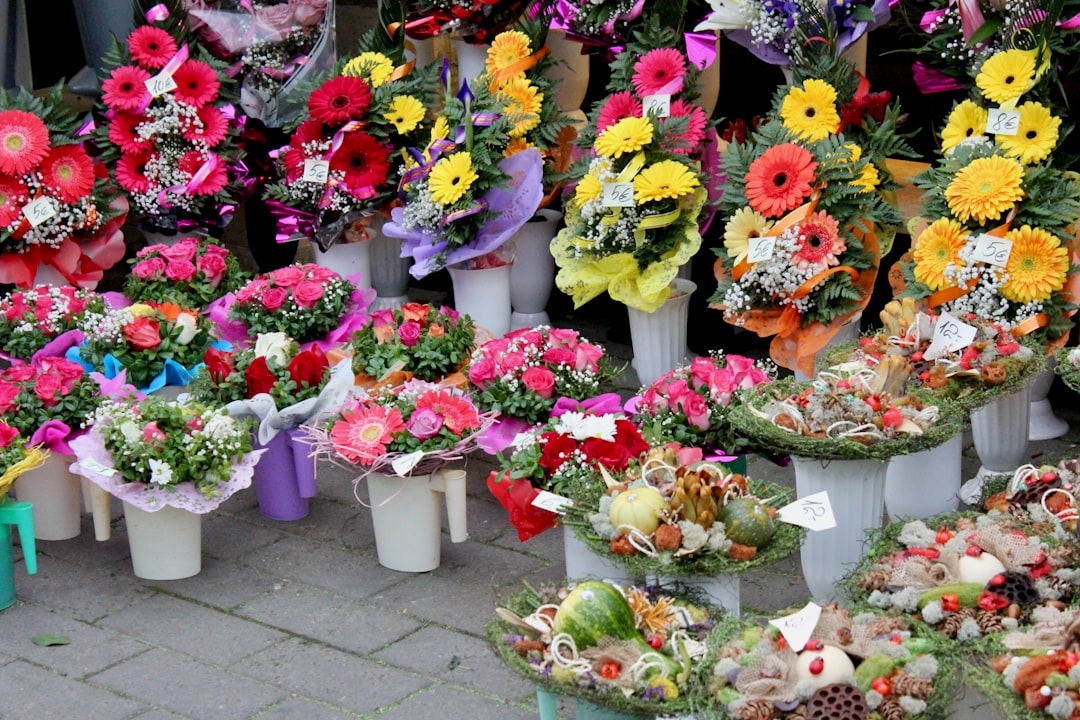
For gardeners interested in sustainable choices, this is a meaningful distinction. Bringing homegrown flowers to a potluck isn’t just socially graceful — it’s materially lower-impact than the alternative. Use a reusable vessel, skip the cellophane, and you’ve made a near-zero-waste gesture that feeds the table’s aesthetic without feeding the supply chain.
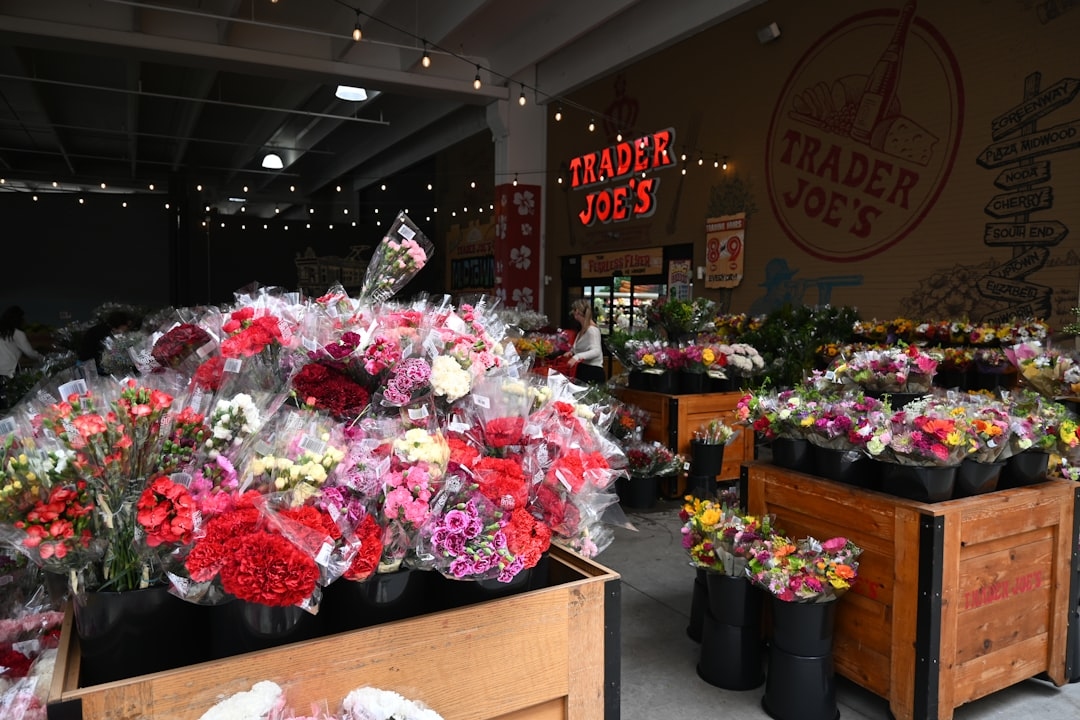
If you don’t grow your own, look for locally grown options at farmers’ markets, which are typically in season, pesticide-reduced, and transported by car rather than plane. Prices run $8–$15 for a generous market bunch — still modest enough to sit comfortably outside the “gift” category.
Practical Tips for Potluck Flower Prep
- Cut stems at a 45-degree angle under running water the morning of the event. This maximizes water uptake and extends vase life by 2–3 days.
- Remove all foliage below the waterline. Submerged leaves decay quickly and cloud the water, releasing bacteria that shorten flower life.
- Pre-hydrate for at least 4 hours before transporting. Flowers that have had time to drink are far more resilient during the drive.
- Transport upright in your vessel — a bucket or a wide-mouth jar wedged between the back seat and the seat-back works well.
- Add a small packet of floral preservative or a teaspoon of sugar and a few drops of bleach to the water. This simple formula keeps the arrangement fresh through a 4–6 hour gathering.
FAQ: Flowers and No-Gift Potluck Etiquette
Are flowers considered a gift at a potluck?
Generally, no — if they’re modest in scale and presented as a table contribution rather than a personal present. A small bunch of 5–7 stems in a self-contained vessel reads as a gesture for the gathering, not a gift for the host.
What if the host explicitly says “absolutely no gifts of any kind”?
In that case, respect the request fully. Some hosts feel genuinely uncomfortable receiving anything. If in doubt, ask a mutual friend or simply skip the flowers and focus on your food contribution.
Is it rude to bring flowers instead of a food dish to a potluck?
Yes, if it replaces your food contribution. Flowers should supplement your dish, not substitute for it. A potluck’s social contract is built around shared eating; arriving with only flowers signals you may not have fully read the room.
How much should I spend on flowers for a no-gift potluck?
Keep it under $20. A farmers’ market bunch ($8–$15) or a small grocery store bouquet is perfectly appropriate. Anything that looks like it came from a florist in a box starts to feel like a gift regardless of your intent.
Can I bring a potted plant instead of cut flowers?
Potted plants are a borderline case. Unlike cut flowers, they require ongoing care and persist in the host’s home — which is closer to a gift. If the plant is small, edible (like a pot of basil), or clearly framed as a contribution to the table, it can work. An orchid or peace lily in decorative wrapping will read as a gift every time.
Making the Most of Your Garden at Social Gatherings
The best potluck gardeners treat these events as a low-stakes creative challenge: what can you grow, cut, and arrange that contributes to the atmosphere without overstepping? It’s genuinely good practice for reading social contexts through a horticultural lens.
Start keeping a short-season cutting garden specifically for this purpose — a 4×8 raised bed of zinnias, celosias, and amaranth will give you a continuous supply of potluck-ready stems from July through October in most of the continental US. Total seed investment: under $15. Social return on investment: considerable.
The next time an invitation says “no gifts,” you don’t have to show up empty-handed. You just have to show up thoughtfully — which, for a gardener, is already second nature.